

NC State Researcher Explores Sustainable Food Innovation
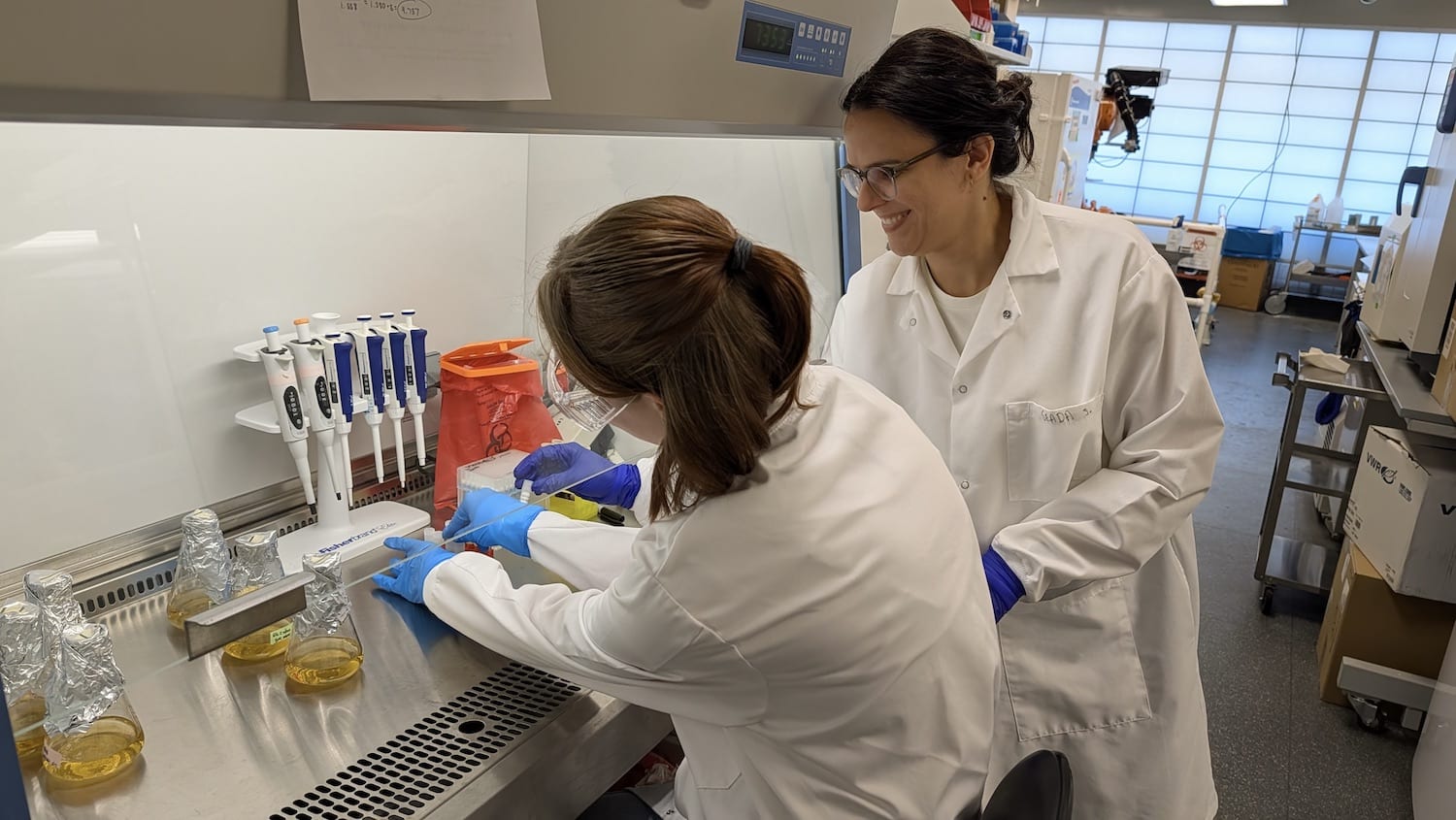
While other kids were playing with dolls, Seada Sloboda pretended to be a scientist, identifying plants in her backyard and pouring water from improvised Erlenmeyer flasks.
Her childhood self would be proud of where she is now — spending her days working with innovative lab equipment as a graduate researcher at the Bezos Center for Sustainable Protein at NC State University.
From Backyard Experiment to Biomedical Engineering
Sloboda arrived in the Research Triangle region in 2025 as a doctoral student in biomedical engineering in the Lampe Joint Department of Biomedical Engineering, a unique collaboration between NC State and University of North Carolina at Chapel Hill.
After earning her master’s degree in biology at Minnesota State University and staying in Minnesota to work in the labs of medical device testing company NAMSA, she pursued moving to a warmer climate and sought to take advantage of the area’s STEM-related research and education opportunities.
After Sloboda applied to NC State for a doctoral program, her major professor Michael Daniele requested an interview to discuss a possible project, the study of microbial nanocellulose and its potential applications. Sloboda wrote her master’s thesis on genetic manipulation of a fish pathogen, and this background in microbiology aligned with the needs of the research team. She joined the lab in August 2025.
Exploring a Small but Mighty Cell
Sloboda and her colleagues are studying the potential applications of microbial nanocellulose, a polymer that is synthesized during fermentation and is an extracellularly produced product of fermentation.
“This material is really cool to work with, and there’s a lot of potential for the different avenues we could take with it,” says Sloboda. “It’s highly absorbent and has great mechanical properties — it’s very strong.”
As a food ingredient, microbial nanocellulose is “essentially pure fiber,” she says. Combined with proteins or other ingredients, it could potentially reduce caloric count while increasing healthy fiber content. A probiotic similar to yogurt or kombucha, the ingredient seemingly has no detrimental properties when consumed in small quantities, making it “a win-win on both ends.”
Sloboda and her team study the material from every angle, altering its properties and testing its performance in a variety of applications. Among its most promising uses is in alternative proteins, where it could serve as a binding and texturizing agent in plant-based meat products or as a scaffold for cultivated meat. It could also be incorporated into ice cream to lower caloric content without sacrificing texture and mouthfeel.

Turning Research Into Results
Sloboda’s doctoral research is co-supervised by Daniele and professor Stefano Menegatti as well as Bezos Center Director Rohan Shirwaiker.
Among the biggest breakthroughs were when the team successfully created dispersed fibers from the microbial nanocellulose.
“It was an aspect of the project that we didn’t expect was going to happen,” admits Sloboda. “But it did, and it’s working well for us. It’s a huge step forward because we’re going from a micromaterial to separating fibers into a nanoscale level that can be incorporated with other materials or ingredients.”
Finding Community in Research
One of Sloboda’s favorite aspects of her work at the Bezos Center is being part of a team. While the new Bezos Center lab is being completed in Fitts-Woolard Hall, her Bezos colleagues are currently located in different spaces across campus.
“But we take opportunities to meet when we can,” she says. “And I look forward to when it is more streamlined, and all Bezos researchers are in the same space together.”
Sloboda most enjoys attending conferences with members of the research team.
“It’s really fun to be there with my team, experiencing alternative food and learning about research others are doing.”
In January 2026, she joined an NC State team attending the inaugural Gordon Research Conference on Foods of the Future: Science and Engineering Approaches. She was among a select group of students invited to present their research at the premier international meeting focused on advancing plant-based, cultivated and fermentation-derived foods.
Research for the Greater Good
Also active in the NC State’s Alt Protein Project (APP), Sloboda proudly participates in research that may contribute to a more sustainable global food system. The APP is a student-led initiative that is a part of The Good Food Institute’s global network, which aims to foster alternative protein education, research and innovation on university campuses.
“The current systems are not working for the overall population,” she says. “The impact of humans, economic conditions and changes in the environment — these all put a huge strain on agriculture. There’s an urgency because a lot of these systems will not be able to sustain our growing population.”
With her biomedical background, Sloboda stays passionate about the intersection of food and medicine, both from a nutrition standpoint and a food safety perspective, and is excited to explore ways her research can nourish future generations.
“I would love to keep working on cellular research of materials that contribute to food production,” she says.
- Categories:


