SPURS Advances Students
Bezos Center's SPURS Program Connects Students with Faculty, Industry Leaders

Think and Do. It’s the mission and mindset of NC State University.
This brand mantra could not be better expressed than in a program like the Sustainable Protein Undergraduate Research Scholars, better known as SPURS.
The Bezos Center for Sustainable Protein at NC State piloted the inaugural program in Summer 2025, and application for the 2026 SPURS program is now open. This competitive opportunity for undergraduate scholars offers faculty-mentored sustainable protein research, professional development and a generous stipend plus housing.
The 2026 program includes nine research projects in which to participate and is open to any U.S.-based undergraduate student. The options cover a full range of topics – from the impact of alternative proteins on U.S. food systems to environmental and cost analysis of sustainable proteins to the development of culture systems for cultivated meat production.
Piqued your interest? A faculty member, an industry professional and an undergraduate student share their 2025 SPURS experiences, delivering an idea of what to expect to future applicants.
Undergraduate Research in Sustainable Proteins

Professor of Electrical and Computer Engineering Michael Daniele led the 2025 SPURS project “Microbial Scaffolds for Cultivated Meat Biomanufacturing.” He runs the BioInterface Lab at NC State.
Daniele’s project involved building microbial cellulose scaffolds, which he describes as a “cool material” used in food products. His interdisciplinary student team included SPURS biochemistry student Ansh Sinha, chemical engineering student Anna Shay and materials science and engineering student Emma Willis.
“The students developed unique biomaterials to assess whether they could grow cultured poultry cells onto them and then consider how that fits into sustainable protein ecosystems,” Daniele says.
The SPURS program offers participants technical and soft skills development, Daniele advises. Sinha was exposed to technical lab skills, like cell culture, bioprinting and biomaterials handling, as well as the important soft skills of team research and team-based collaboration in general.
“Getting a true taste for how team-based science and engineering works is really important for undergraduate students,” Daniele says. “Research today, especially in the Bezos Center and SPURS, is very interdisciplinary.”
Sustainable Protein Industry Connections

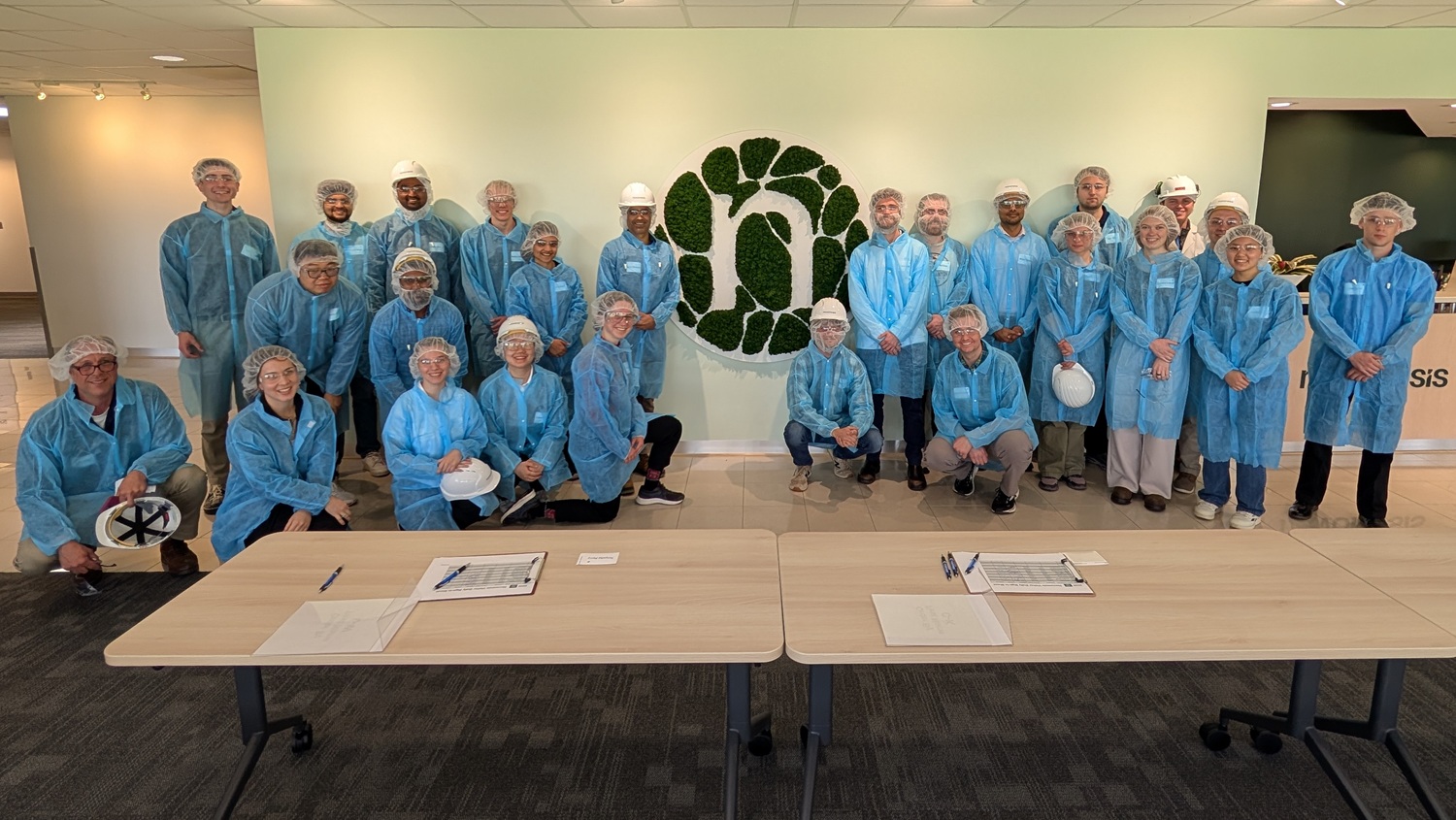
Novonesis is a world-leading biosolutions partner with its North American headquarters in Franklinton, North Carolina, which just happens to be the largest enzyme production site in North America.
And SPURS participants had a behind-the-scenes look at this biomanufacturing facility as well as met its impressive food scientists and engineers.
Regional Business Relations Partner Margaret Walter mentored two SPURS students during the program, meeting weekly to explore STEM career opportunities.
“We discussed everything from my career journey and their potential career pathways to practical advice on crafting standout résumés,” she says.
In addition to learning how to better position themselves for meaningful careers, students gained a deep understanding of working in an industry setting and of how Novonesis uses biosolutions to enhance plant-based proteins, with hopes of feeding the world more sustainably.
“They discovered how biosolutions, including enzymes, functional proteins and microorganisms, are brought to life through innovation and collaboration,” Walter says.
SPURS Student Growth in Research
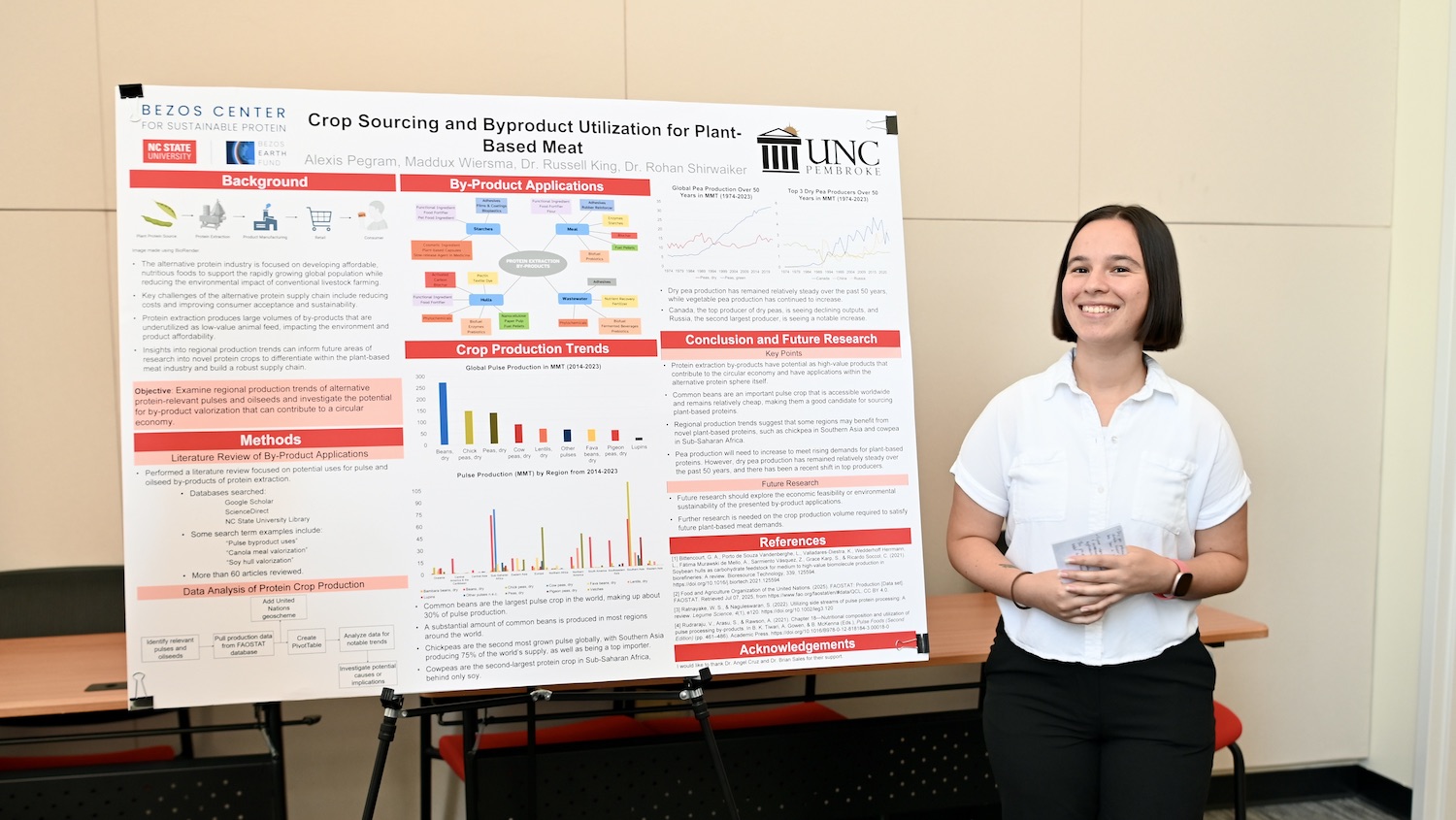
Participating in SPURS was Alexis Pegram’s first foray into undergraduate research.
Now, the UNC Pembroke senior is feeling more confident in her academic and professional development experience than ever before.
Pegram plans to earn her bachelor’s in biology with a minor in sustainable agriculture, so SPURS aligned perfectly with her academic pursuits, specifically the research project, “Supply Chains for Sustainable Protein Products.”
For Pegram, SPURS highlights include conducting independent research and learning how to make a research poster. She also appreciated practicing her research presentation and participating in résumé workshops.
Pegram’s research, “Crop Sourcing and Byproduct Utilization for Plant-Based Meat,” focused on regional projection trends and considered potential applications of soy and canola byproducts, like the seedcoat.
“I was able to grow myself both academically and professionally in this program,” she says. “One of my favorite parts of SPURS was learning from my peers.”
Looking to the future, Pegram will seek an ORISE STEM Internship following her May graduation and then will pursue an industry position, with graduate school a future possibility.
“SPURS increased my confidence in pursuing academic and professional opportunities,” she says. “It provided a taste of the graduate school experience and prepared me for that option. It also improved my communications skills with peers and mentors.”
If working with world-renowned faculty, conducting hands-on sustainable protein research and engaging with industry professionals sounds like the perfect fit for your goals, apply for SPURS in 2026.
Join us to Think and Do.
- Categories: